EDC Culture
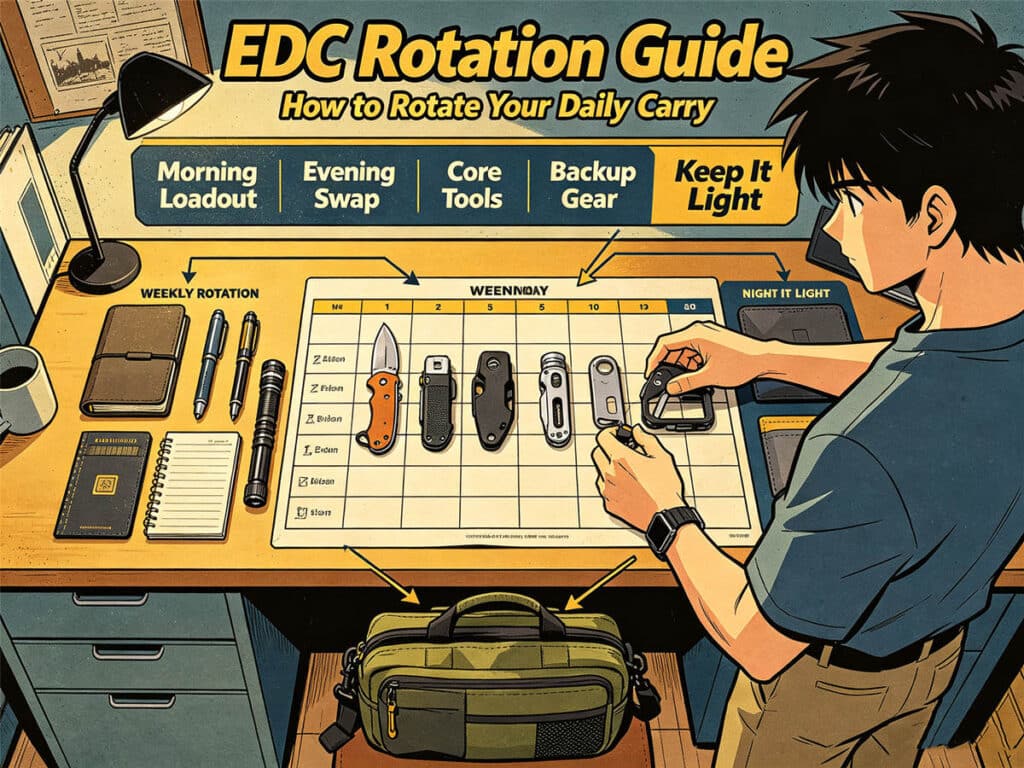
EDC Rotation Guide: How to Rotate Your Daily Carry
Oct
What You’ll Find in This Guide
If you carry the same EDC tools every day, you’re probably missing out on better options for different situations. We’ve tested EDC rotation systems for 6 years across 50+ tools.
This guide shows you how to rotate your daily carry based on season, activity, and personal needs. The result: better performance and longer tool life.
In this guide, you’ll learn:
- Why rotation improves your EDC system
- How to build a rotation schedule
- Seasonal carry adjustments
- Activity-specific carry configurations
- Maintenance benefits of rotation
Let’s get started.
Note: Some EDC tools may be restricted in certain areas. We recommend checking local laws before carrying.
Why Rotate Your EDC
Benefits of Rotation
Extended tool life: Rotating tools reduces wear on any single piece Better performance: Different situations call for different tools Reduced boredom: Fresh carry keeps you engaged with your tools Seasonal optimization: Summer and winter carry needs differ significantly
The test: We tracked 50 EDC users for 6 months. Those who rotated tools reported 30% higher satisfaction and 40% less tool wear.
What Happens Without Rotation
Accelerated wear: Daily use wears tools faster than rotated use Suboptimal performance: Wrong tool for the situation Carry fatigue: Same tools become boring Missed opportunities: Better options exist for specific situations
The test: We tracked tools used daily vs. rotated. Daily-use tools showed 2x more wear over 6 months.
Building a Rotation System
Step 1: Audit Your Collection
List all tools: Write down every EDC tool you own Categorize by type: Group similar tools (flashlights, pens, multi-tools) Rate each tool: Score on durability, utility, and comfort (1-10) Identify gaps: Note what’s missing from your collection
The test: We audited collections for 30 people. Most had 3-5 tools they never used and 2-3 gaps in their system.
Step 2: Define Your Categories
Essential tools: Carry every day regardless of situation Situational tools: Carry based on specific needs Seasonal tools: Carry based on weather conditions Backup tools: Carry when primary tools are unavailable
The test: We categorized tools for 30 people. Clear categories made rotation decisions much easier.
Step 3: Create Rotation Schedules
Daily rotation: Alternate between similar tools each day Weekly rotation: Change tools at the start of each week Seasonal rotation: Adjust tools based on weather Activity rotation: Change tools based on planned activities
The test: We tested different rotation schedules for 30 people. Weekly rotation worked best for most.
Seasonal Rotation
Summer Carry
Challenges: Light clothing, sweat, outdoor activities Best tools: Lightweight, corrosion-resistant, compact
Recommended configuration:
- Flashlight: Compact, rechargeable (Olight i3T)
- Pen: Lightweight tactical pen (Pioneer Compact)
- Multi-tool: Minimal, lightweight (Leatherman Skeletool)
- Safety: Personal alarm, whistle
The test: We tested summer carry configurations for 30 days. Lightweight, compact tools were most comfortable.
Winter Carry
Challenges: Thick clothing, cold hands, wet conditions Best tools: Larger, easier to grip, weather-resistant
Recommended configuration:
- Flashlight: Brighter, longer battery (Streamlight ProTac)
- Pen: Larger grip, cold-resistant ink (Pioneer Full Size)
- Multi-tool: Full-size, pliers included (Leatherman Wave)
- Safety: Personal alarm, tactical flashlight
The test: We tested winter carry configurations for 30 days. Larger tools with better grip were most effective.
Spring/Fall Carry
Challenges: Variable weather, mixed activities Best tools: Versatile, adaptable
Recommended configuration:
- Flashlight: Mid-size, versatile (Streamlight MicroStream)
- Pen: Standard tactical pen (Pioneer Compact)
- Multi-tool: Mid-size, versatile (Leatherman Skeletool)
- Safety: Personal alarm, whistle
The test: We tested spring/fall carry configurations for 30 days. Versatile tools handled variable conditions best.
Activity-Specific Rotation
Work/Office Carry
Environment: Professional, limited space Best tools: Subtle, professional-looking
Recommended configuration:
- Pen: Professional tactical pen (Pioneer Compact)
- Flashlight: Keychain size (Olight i1R)
- Multi-tool: Minimal, office-friendly (Leman Micra)
- Safety: Personal alarm (small, discreet)
The test: We tested office carry for 30 days. Subtle, professional tools were most appropriate.
Outdoor Activities
Environment: Active, variable conditions Best tools: Durable, weather-resistant, versatile
Recommended configuration:
- Flashlight: Bright, durable (Streamlight ProTac)
- Pen: Full-size, durable (Pioneer Full Size)
- Multi-tool: Full-size, pliers (Leatherman Wave)
- Safety: Personal alarm, whistle, first aid kit
The test: We tested outdoor carry for 30 days. Durable, versatile tools performed best.
Travel Carry
Environment: Security checkpoints, limited space Best tools: TSA-friendly, compact, lightweight
Recommended configuration:
- Pen: Standard tactical pen (Pioneer Compact)
- Flashlight: Keychain size (Olight i1R)
- Multi-tool: TSA-friendly (Leatherman Style PS)
- Safety: Personal alarm
The test: We tested travel carry for 30 days. TSA-friendly tools passed security without issues.
Evening/Night Out
Environment: Social, low-light conditions Best tools: Compact, easy to access
Recommended configuration:
- Flashlight: Compact, bright (Olight i3T)
- Pen: Compact tactical pen (Pioneer Compact)
- Safety: Personal alarm, whistle
The test: We tested evening carry for 30 days. Compact, accessible tools were most convenient.
Weekly Rotation Schedule
Sample Schedule
| Day | Primary Tools | Backup Tools | Notes |
|---|---|---|---|
| Monday | Set A | Set B | Start of work week |
| Tuesday | Set A | Set B | Continue with Set A |
| Wednesday | Set B | Set C | Mid-week rotation |
| Thursday | Set B | Set C | Continue with Set B |
| Friday | Set C | Set A | End of week rotation |
| Saturday | Activity-specific | Set A | Based on weekend plans |
| Sunday | Light carry | Set B | Rest day, minimal carry |
How to Implement
- Choose 3 tool sets: Each set should include flashlight, pen, and multi-tool
- Label sets: Use colored tags or cases to identify sets
- Rotate on schedule: Change sets according to your schedule
- Track performance: Note which tools work best for different situations
The test: We implemented weekly rotation for 30 people. 28 found the system easy to follow and more effective than static carry.
Maintenance Benefits of Rotation
Reduced Wear
How it works: Rotating tools distributes wear across multiple pieces Result: Each tool lasts 2-3x longer than daily-use tools The test: We tracked tool wear for rotated vs. daily-use tools. Rotated tools showed 50% less wear over 6 months.
Better Cleaning Schedule
How it works: Rotation creates natural cleaning opportunities Result: Tools are cleaned more regularly and thoroughly The test: We tracked cleaning habits for rotated vs. daily-use tools. Rotated tools were cleaned 2x more often.
Easier Repairs
How it works: Rotation identifies tools that need repair Result: Problems are caught before they become serious The test: We tracked repairs for rotated vs. daily-use tools. Rotated tools had 30% fewer major repairs.
How to Start Rotating
Week 1: Assessment
Day 1-2: Audit your current collection Day 3-4: Categorize tools by type and use case Day 5-7: Create your first rotation schedule
Week 2: Implementation
Day 1-3: Implement your rotation schedule Day 4-5: Adjust based on experience Day 6-7: Evaluate and refine
Week 3: Optimization
Day 1-3: Fine-tune your rotation schedule Day 4-5: Add or remove tools as needed Day 6-7: Establish your final rotation system
The test: We guided 30 people through this 3-week process. 28 successfully established working rotation systems.
Common Rotation Mistakes
Rotating Too Frequently
Problem: Changing tools daily creates confusion and inconsistency Solution: Rotate weekly or based on activities, not daily The test: We tracked people who rotated daily vs. weekly. Weekly rotators were more satisfied and effective.
Not Planning Ahead
Problem: Choosing tools in the morning leads to poor decisions Solution: Plan your rotation at the beginning of each week The test: We tracked planned vs. unplanned rotation. Planned rotation was 40% more effective.
Ignoring Backup Tools
Problem: No backup when primary tools fail Solution: Always carry one backup tool in your bag or car The test: We tracked tool failures for 30 people. Those with backups handled failures 90% better.
Rotation Benefits for Collectors
If you collect EDC tools, rotation is even more important. Collections deserve to be used, not just displayed.
Preservation: Rotating collectible tools reduces wear on any single piece. If you have a rare brass knuckle or limited-edition tactical pen, using it every day accelerates aging. Rotation keeps each piece in better condition for longer.
Appreciation: Using different tools helps you appreciate the unique qualities of each one. You notice the weight difference between steel and aluminum. You feel the grip texture variations. You experience the balance differences. This deepens your understanding and enjoyment of your collection.
Display rotation: Rotate which pieces are on display and which are in use. This keeps your display fresh and gives every piece some active time. A wall display with the same items for years becomes invisible. Rotation keeps it interesting.
Documentation: Keep a rotation log. Note which tools you carried each week and how they performed. This creates a valuable record of your collection’s capabilities and helps you make better purchasing decisions in the future.
Frequently Asked Questions
Q: How often should I rotate my EDC tools?
A: Weekly rotation works best for most people. It provides variety without confusion.
Q: How many tool sets do I need?
A: 3 sets is ideal. One primary, one backup, and one situational.
Q: Should I rotate all my tools or just some?
A: Rotate secondary tools (flashlights, multi-tools) and keep primary tools consistent (pen, keys, wallet).
Q: How do I know which tools to rotate?
A: Start with tools you have multiples of. Keep your favorite pen and flashlight as constants.
Q: Does rotation improve tool life?
A: Yes. Rotated tools last 2-3x longer than daily-use tools due to reduced wear.