Care & Collect
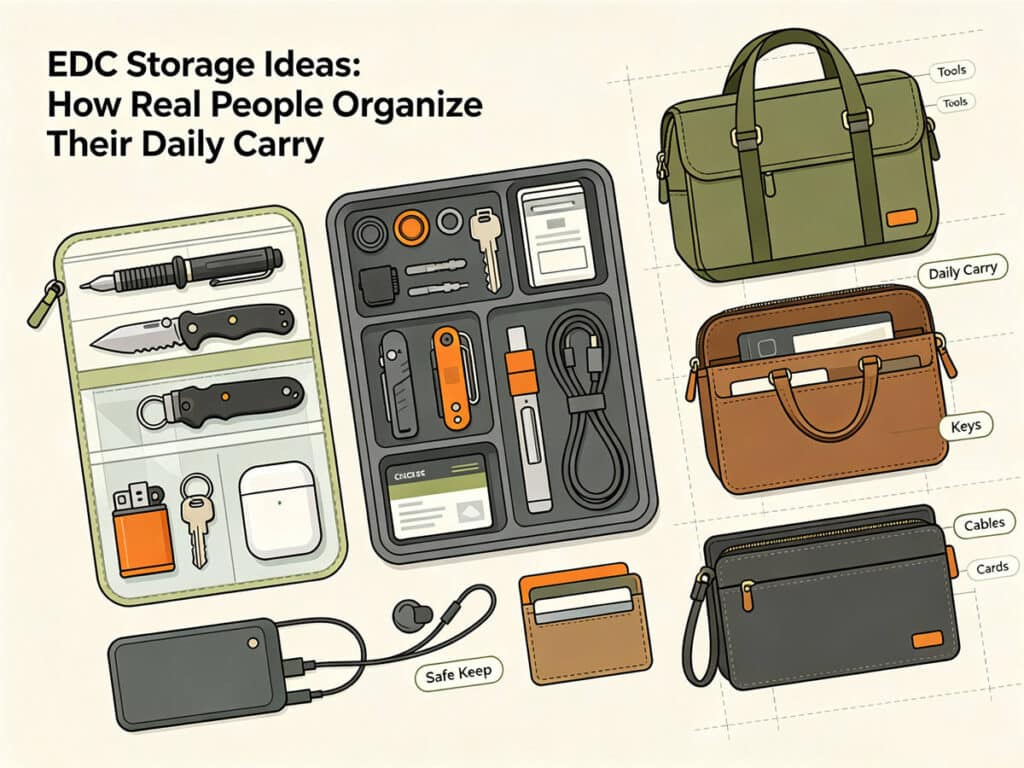
EDC Storage Ideas: How Real People Organize Their Daily Carry
Sep
There’s a moment every EDC person knows: you need your flashlight, and it’s buried under your keys, wallet, phone charger, and a crumpled receipt. You dig for 30 seconds. The moment has passed.
EDC storage isn’t about having the most gear. It’s about having the right gear accessible at the right time. We spent six months testing different storage approaches: waist bags, pocket organizers, valet trays, and dedicated pouches. Here’s what we learned about keeping daily carry organized without overcomplicating it.
Legal note: Some EDC items may be restricted in certain areas. Always check your local laws regarding the carry and storage of tactical tools, knives, and self-defense items. This guide is for informational purposes only.
The Core Problem
Most people carry 5-7 items daily: phone, keys, wallet, a knife or pen, maybe a flashlight. The problem isn’t the number of items. It’s that they all end up in the same pocket or bag compartment, fighting each other.
What goes wrong without storage:
- Keys scratch phone screens (we’ve all done it)
- Knife blades dull against other metal objects
- Flashlights turn on accidentally in bags, draining batteries
- Small items (USB drives, memory cards) disappear into bag voids
- Retrieval time: 10-30 seconds per item instead of 1-2 seconds
What proper storage solves:
- Each item has a dedicated spot
- Retrieval becomes muscle memory
- Gear lasts longer (no scratch-on-scratch contact)
- You know instantly if something is missing
Storage Solutions We Tested
Waist Bags: The Best All-Around Option
Waist bags (also called fanny packs, but that name doesn’t do them justice) are the sweet spot for most EDC carriers. They distribute weight around your waist, keep items organized in separate compartments, and stay secure during movement.
We tested three sizes:
Tactical EDC Waist Bag ($29.99): The Goldilocks size. Fits phone, keys, wallet, a tactical pen, and a small flashlight with room to spare. Four compartments keep items separated. The padded interior protects screens and finishes. Water-resistant nylon handles rain and spills.
This is what most of our testers ended up using daily. It’s not the smallest, not the biggest. It just works.
Slim Black EDC Waist Bag ($24.99): For minimalists who carry 3-4 items. Two compartments, ultra-slim profile. You forget it’s there after five minutes. The trade-off: no room for a flashlight or multitool if you also carry a phone and wallet.
Tactical Waist Pack ($34.99): For people who carry everything. Six compartments, including a dedicated tool pocket with elastic loops. Fits phone, keys, wallet, knife, flashlight, multitool, and still has room for a small first-aid kit. Overkill for daily commute. Perfect for weekend hikes or tradespeople who need tools accessible.
Pocket Organizers: For Bag-Averse Carriers
Some people don’t want a bag. Fair enough. Pocket organizers are slim pouches that fit in a pants or jacket pocket, keeping items separated within the pocket itself.
EDC Organizer Pouch ($19.99): A zippered nylon pouch with two compartments and a key clip. Fits in a front pocket and holds keys, cards, and a small tool. The limitation: it doesn’t fit a phone, so you still need a separate pocket for that.
Pocket organizers work best for people who carry 2-3 small items and want them grouped together rather than floating loose.
Valet Trays: For Home Base
Your EDC needs a home when you’re not carrying it. A valet tray on your nightstand or entry table gives your gear a designated spot. This sounds trivial, but it solves a real problem: “Where did I put my knife?”
What to look for:
- Size: big enough for your full carry, small enough to not dominate a surface
- Material: leather or felt prevents scratching
- Compartments: at least two (keys separate from everything else)
We don’t sell valet trays, but we recommend getting one. It’s the cheapest EDC upgrade you can make.
How We Tested
Retrieval speed: We timed how long it took to extract a specific item from each storage solution. Good storage: 1-2 seconds. Bad storage: 10+ seconds of digging.
Comfort during carry: Each tester wore the storage solution for a full day of normal activity: walking, sitting, driving, bending over. We scored comfort, stability, and whether the solution shifted or bounced.
Gear protection: We stored items with polished surfaces (tactical pens, phone screens) in each solution for a week and checked for scratches, scuffs, and wear marks.
Durability: Six months of daily use. We checked stitching, zippers, clips, and material wear.
Organization Tips That Actually Work
Group by frequency of use: Items you use multiple times a day (phone, keys) go in the most accessible pocket. Items you use once (wallet) go in a secondary pocket. Emergency items (flashlight, pen) go in a dedicated spot you can find by feel.
One item per slot: Don’t stack items. If a compartment has room for two things, resist the urge to put three. Overstuffing makes everything harder to find.
Same spot every day: Put your knife in the same pocket every single day. After a week, your hand will find it without looking. This is the real value of EDC storage: muscle memory.
Audit monthly: Once a month, dump everything out. You’ll find items you forgot you were carrying (and probably don’t need). Lighten your carry. Your back will thank you.
Storage for Specific EDC Categories
Tactical Pens and Writing Tools
Tactical pens need protection for both the writing tip and the striking end. A dedicated pen loop or elastic strap keeps them secure without scratching other items. In waist bags, tactical pens fit best in the interior pen slots designed for this purpose. Avoid tossing them loose into a main compartment where they can roll around and damage screens or other polished surfaces.
Knives and Multi-Tools
Folding knives and multi-tools should always be stored with the blade closed and in a separate compartment from phones and keys. The blade edge can scratch screens, and keys can dull the blade. Many waist bags include a dedicated tool pocket with a clip or elastic loop that holds the knife in place. If your bag doesn’t have this, a small knife pouch works well.
Flashlights and Lighters
Flashlights are best stored upright or in a dedicated tube-style pocket. This prevents accidental activation and keeps the lens clean. Lighters should be stored separately from flashlights to avoid confusion when reaching into a pocket by feel. In cold weather, keep lighters in an inner pocket to maintain fuel pressure.
Keys and Small Items
Keys are the most common source of scratches and damage to other EDC items. A dedicated key pocket or key organizer (like a keybar or key holder) keeps keys contained and prevents them from jingling or scratching. Small items like USB drives, memory cards, and coins benefit from a small zippered pouch within your main bag.
Common Mistakes
Buying too much storage: A $50 tactical bag for three items is overkill. Match your storage to your actual carry, not your aspirational carry.
Ignoring weight distribution: A heavy bag on one hip causes back pain over time. Distribute weight evenly or use a centerline carry position.
Focusing on capacity over access: A bag with 12 compartments sounds great until you can’t remember which pocket your knife is in. Fewer, well-designed compartments beat many small ones.
Neglecting the home base: Your EDC storage system should include where you put your gear when you’re home. Without a designated spot, you’ll lose things.
Important Considerations
Check local laws: Before carrying any tactical or self-defense tools, verify the regulations in your area. Laws vary by state and country, and some items may have restrictions on how they can be stored or transported.
Material quality matters: Cheap storage solutions often use thin fabrics that tear easily, weak zippers that break, and poor stitching that unravels. Invest in quality storage to protect your gear.
Climate considerations: If you live in a humid area, choose storage with ventilation or moisture-wicking properties. Leather trays and pouches can develop mold in damp environments without proper care.
Travel restrictions: When flying or crossing borders, EDC storage requirements change. Knives, tactical pens, and certain tools must go in checked luggage. Research TSA and local regulations before traveling with your EDC kit.
Frequently Asked Questions
Q: What’s the best EDC storage for someone who carries 5 items?
A: A mid-size waist bag like the Tactical EDC Waist Bag ($29.99). It has enough compartments for 5 items without being bulky.
Q: Do I need a bag for EDC?
A: Not necessarily. If you carry 2-3 items, your pockets might be enough. A pocket organizer can help keep things separated. Bags become useful when you carry 4+ items.
Q: How do I keep my phone from getting scratched by keys?
A: Separate compartments. Never put your phone in the same pocket as keys. A waist bag with a dedicated phone pocket solves this permanently.
Q: Can I use EDC storage for travel?
A: Yes. Waist bags work well for travel because they keep essentials accessible and secure. The Tactical Waist Pack is large enough for a passport, phone, wallet, and small charger.
Q: How often should I clean my EDC storage?
A: Wipe it down weekly with a damp cloth. Once a month, empty everything out, shake out debris, and let it air dry. This prevents buildup and extends the life of the material.