Quick Guides
Stainless Steel vs Carbon Fiber Tactical Pen: Which Should You Buy?
Aug
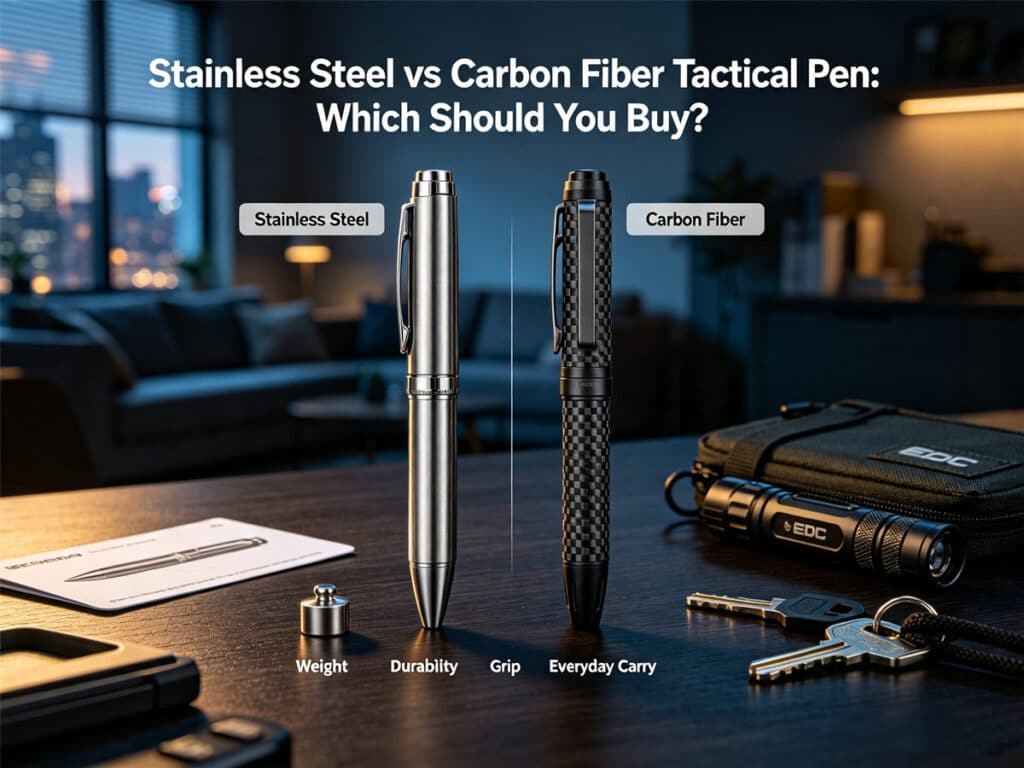
Stainless Steel vs Carbon Fiber Tactical Pen: Which Should You Buy?
Two materials dominate the tactical pen market. One has been trusted by the military and industrial world for over a century. The other was born in aerospace labs and now shows up everywhere from Formula 1 chassis to high-end EDC gear. When you’re choosing a tactical pen, the stainless steel vs carbon fiber debate isn’t just about looks — it shapes how the pen feels in your hand, how it performs under stress, and how long it lasts in your daily rotation.
At Knuckles Warriors, we work with both materials across our product line. We’ve seen firsthand what each one brings to the table, and we know the choice isn’t always obvious. This guide breaks down the real differences so you can pick the tactical pen that matches your carry style.
1. What Each Material Actually Is
Before comparing performance, it helps to understand what you’re actually holding. These two materials come from completely different engineering worlds, and that origin story shapes everything about how they behave in your pocket and in your hand.
Stainless Steel: The Industrial Standard
Stainless steel is an iron alloy blended with chromium (at least 10.5%) to resist corrosion. In tactical pens, manufacturers typically use 304 or 316-grade stainless steel — the same grades found in surgical instruments and marine hardware. It’s dense, it’s tough, and it has a reassuring heft that many EDC enthusiasts prefer. CNC-machined stainless steel pens have tight tolerances and a seamless feel that cheaper metals simply can’t replicate.
Carbon Fiber: The Aerospace Upgrade
Carbon fiber is a polymer reinforced with woven carbon strands. The result is a material that’s roughly five times stronger than steel by weight. In tactical pen construction, carbon fiber is typically used for the body barrel while stainless steel or titanium components handle the tip, clip, and threading. This hybrid approach gives you the lightweight advantage of carbon fiber where it matters most — the part your hand grips — while keeping structural strength at the pressure points.
2. Weight and Carry Comfort
This is where the two materials diverge most sharply, and it’s the factor that matters most for everyday carry.
The Heft of Steel
A stainless steel tactical pen typically weighs between 2.5 and 3.5 ounces. That weight creates a solid, grounded feel in your hand. For people who prefer their EDC gear to have presence — the kind of weight that reminds you it’s there — stainless steel delivers. The trade-off is that over a full day of writing or carrying in a shirt pocket, that weight adds up. Shirts sag. Pockets bulge. Your hand tires faster during extended writing sessions.
The Lightness of Carbon Fiber
A carbon fiber tactical pen with steel fittings usually lands between 1.0 and 1.8 ounces — roughly half the weight of an all-steel pen. You barely notice it in your pocket. For professionals who carry a pen all day — teachers, field engineers, first responders — the lighter option means less fatigue and more comfort. Some users initially mistake the lightness for cheapness, but the moment you flex a carbon fiber barrel or tap it against a hard surface, you realize this material doesn’t play by normal rules.
3. Durability and Impact Resistance
A tactical pen isn’t just a writing instrument. It’s a self-defense tool that may need to perform under sudden, high-force impact. How each material handles that stress is a critical differentiator.
Steel Bends; Carbon Fiber Shatters
Stainless steel is ductile. Under extreme force, it dents, bends, or deforms — but it doesn’t snap. That’s a meaningful advantage in a self-defense scenario where the pen tip strikes a hard surface. The pen absorbs energy and stays intact. You might end up with a dent, but the tool remains functional.
Carbon fiber behaves differently. It has an exceptional strength-to-weight ratio under normal loads, but under a sharp, concentrated impact — say, striking a car window or making contact with bone — it can crack or shatter along the fiber weave. Modern layup techniques have made this failure mode rare, but it’s worth knowing. The carbon fiber barrel on a tactical pen is reinforced with steel tips for exactly this reason: the carbon fiber handles the grip, the metal handles the strike.
Surface Wear Over Time
Stainless steel picks up scratches. Over months of daily carry, a brushed-steel pen develops a patina of fine marks. Some users love this — it shows character, tells a story of daily use. Others find it sloppy. Polished steel shows scratches even faster, and fingerprints become a constant companion.
Carbon fiber resists surface wear better. The woven texture hides minor scuffs, and the material doesn’t corrode — not from sweat, not from rain, not from years of pocket carry. After a year of daily use, a carbon fiber pen often looks nearly identical to the day you bought it. For professionals who pull their pen out in client meetings, that lasting clean appearance matters.
4. Grip and Tactile Feel
How a pen feels in your hand affects both your writing quality and your ability to maintain control during a high-stress encounter.
Smooth and Cold vs Warm and Textured
Stainless steel is smooth and thermally conductive. In cold weather, it feels icy until your hand warms it up. In hot, humid conditions, a smooth steel barrel can get slippery — especially if your palms sweat. Some tactical pen designs add knurling or grooves to counteract this, but the base material remains slick.
Carbon fiber has a naturally textured surface from the woven fiber pattern. That texture provides passive grip without aggressive texturing — your fingers find purchase on the weave itself. The material also has lower thermal conductivity, so it doesn’t steal heat from your hand in winter or overheat in summer. For a self-defense tool where grip security matters, this is a practical advantage that separates carbon fiber from every metal alternative on the market.
5. Side-by-Side Comparison
| Feature | Stainless Steel | Carbon Fiber |
|---|---|---|
| **Weight** | 2.5–3.5 oz | 1.0–1.8 oz |
| **Strength-to-weight ratio** | Good | Excellent |
| **Impact behavior** | Bends/dents | Can crack under extreme force |
| **Corrosion resistance** | High (304/316 grade) | Immune |
| **Surface wear** | Scratches visibly | Hides wear well |
| **Grip in wet conditions** | Slippery without texturing | Naturally textured |
| **Thermal comfort** | Cold in winter, hot in summer | Neutral temperature range |
| **Price range** | $20–$70 | $50–$100 |
| **Best for** | Maximum durability, self-defense priority | Lightweight EDC, all-day carry |
6. Which Pen Is Right for You?
The honest answer depends on how you plan to use the pen — and what you’re willing to trade off. Neither material is universally “better.” The right choice is the one that matches your daily routine, your grip preference, and how you think about your EDC gear.
Choose Stainless Steel If Durability Is Your Priority
If your tactical pen lives in a jacket pocket, a car console, or a range bag, and you want the most robust option possible, go with stainless steel. It handles abuse without complaint. It has the mass to deliver meaningful force on impact. And at a lower price point, it’s the smarter choice for anyone who treats their EDC gear as tools first and accessories second. At KW, our stainless steel tactical pens are built with this exact philosophy — heavy-duty construction that doesn’t cut corners.
Choose Carbon Fiber If You Carry All Day
If your tactical pen goes everywhere with you — clipped to a shirt pocket, riding in a slim pants pocket, sitting on a conference table — weight and aesthetics matter more. A carbon fiber pen disappears into your carry until you need it. It writes comfortably for long sessions, resists the wear patterns of daily use, and looks sharp without trying too hard. Our Titanium Bolt Action Tactical Pen pairs a titanium body with similar lightweight principles for those who want metal toughness without the bulk of steel.
7. How We Build Tactical Pens at KW
At Knuckles Warriors, we don’t believe in one-size-fits-all. Our tactical pen lineup spans multiple materials and price points because different carriers have different needs. The Pioneer Compact Tactical Pen is a perfect example — engineered for portability without sacrificing the structural integrity you’d expect from a self-defense tool. For those who want premium build quality, our Tungsten Steel Tactical Pen pushes hardness to another level entirely.
We design every pen with a tungsten or hardened steel tip for glass-breaking capability, because a tactical pen should do more than write. The body material — whether stainless steel, titanium, or carbon fiber composite — determines the carry experience. The tip determines the tool’s reliability when it counts.
Browse our full tactical pen collection to find the material, weight, and style that fits your everyday carry. Whether you lean toward the battle-tested reliability of stainless steel or the modern engineering of carbon fiber, we’ve built something worth carrying.