
Quick Guides
Brass Knuckle Legality by State: A Quick Reference
Aug
Brass Knuckle Legality by State: A Quick Reference
Overview
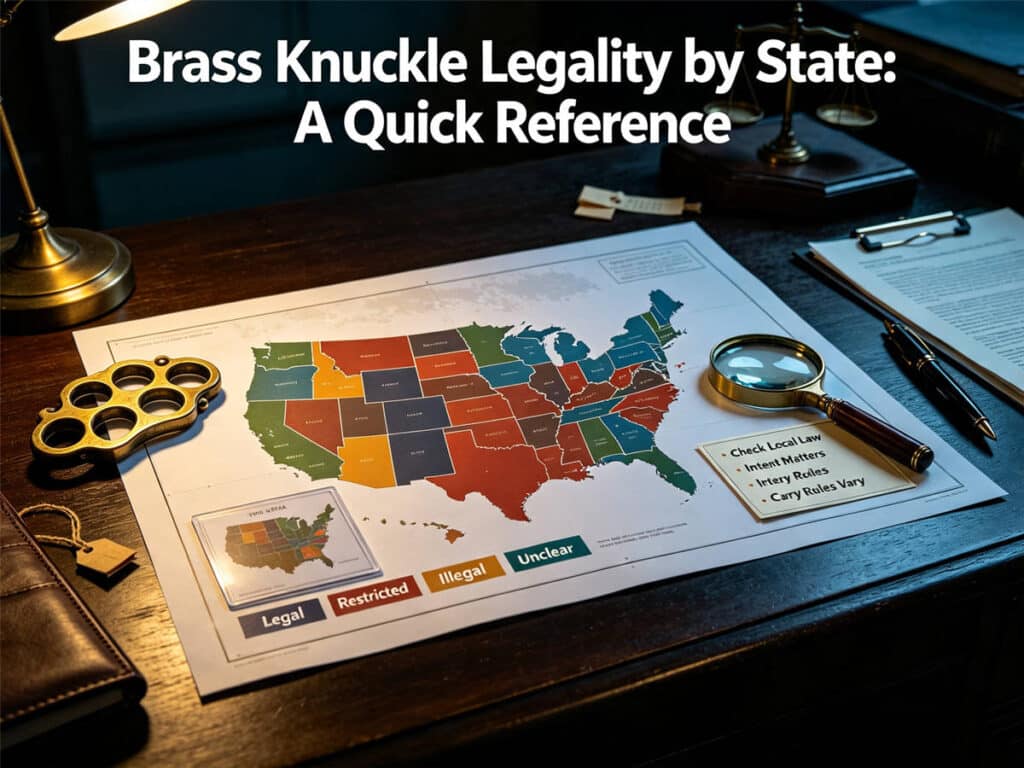
Brass knuckle legality varies significantly across the United States, creating a complex patchwork of regulations that can be challenging to navigate. Some states permit possession without restriction, others require permits for concealed carry, and a few ban them outright. Understanding your specific state and local laws is essential before purchasing or carrying brass knuckles. This quick reference guide outlines the key do’s, don’ts, and legal differences to help you navigate the regulations responsibly and avoid unintentional legal violations. Always verify current laws through official state resources or consult a legal professional for the most accurate information.
Do’s ✅
Check Local Laws Before Purchase
Always research your state, county, and city laws before buying brass knuckles. Regulations can change frequently, and local ordinances may impose additional restrictions beyond state law. For example, a state might allow possession, but a specific city could have stricter rules about carrying in public places. Consult official state statutes or a legal professional for the most current information. Many states provide online resources through their legislative websites where you can search for specific weapons laws.
Verify State and County Regulations
State law often sets the baseline, but county or municipal rules may be stricter. Some counties may require additional permits or have specific restrictions about where brass knuckles can be carried. Always check both state and local regulations to ensure full compliance. When in doubt, contact your local law enforcement agency for clarification—they can provide guidance on specific ordinances in your area. Consider keeping a record of the laws you’ve reviewed to demonstrate your commitment to compliance.
Keep Documentation Handy
If your state requires a permit for concealed carry, keep your documentation accessible when transporting brass knuckles. This can help avoid misunderstandings with law enforcement and demonstrate your intent to comply with the law. Consider keeping a digital copy on your phone as well as a physical copy. If traveling across state lines, research the laws of each state you’ll be visiting and keep any necessary permits readily available. This preparation can prevent legal complications during travel.
Don’ts ❌
Don’t Assume All States Are the Same
Legality varies widely. What is legal in one state may be a criminal offense in another. Never assume that because brass knuckles are legal in your home state, they are legal everywhere you travel. For instance, Texas legalized brass knuckles in 2019, but neighboring states may have completely different laws. Always verify the specific regulations of any location you plan to visit. This due diligence is crucial for responsible ownership.
Don’t Carry in Restricted Areas
Even in states where brass knuckles are generally legal, they are often prohibited in specific locations such as schools, government buildings, courthouses, airports, and bars. Many private businesses also post “no weapons” policies that must be respected. Violating these restrictions can result in serious legal consequences, even if you have a valid permit. Always look for posted signage and respect property owners’ rules. When visiting unfamiliar places, ask about weapons policies before entering.
Don’t Transport Across State Lines Without Research
Transporting brass knuckles across state lines can lead to serious legal consequences if the destination state has stricter laws. Federal law does not specifically regulate brass knuckles, but state laws vary dramatically. Before traveling, research the laws of any state you plan to visit or pass through. If you’re unsure, it’s safer to leave your brass knuckles at home rather than risk legal complications in another jurisdiction. Planning ahead can save you from unexpected legal issues.
Key Legal Differences by State
States Where Brass Knuckles Are Generally Legal
In states like Arizona, Georgia, Idaho, Indiana, Kentucky, Missouri, Montana, Ohio, South Carolina, South Dakota, Texas, Utah, and Wyoming, brass knuckles are legal to possess and carry without a permit. However, local restrictions may still apply, and use with criminal intent remains illegal everywhere. These states typically treat brass knuckles as tools or collectibles rather than weapons, but responsible ownership and use are still expected. Always check for any recent legislative changes that might affect legality.
States With Restrictions or Licensing Requirements
Several states, including Alabama, Florida, Louisiana, Maryland, Mississippi, Nebraska, New Mexico, North Carolina, North Dakota, Oregon, West Virginia, and Wisconsin, allow possession but require a concealed weapons permit for carry. Without a permit, carrying concealed brass knuckles in these states is typically illegal. The permitting process often involves background checks, safety courses, and fees. Some states may also have age restrictions or other requirements for obtaining a permit. Research your state’s specific permit requirements well in advance.
States Where Brass Knuckles Are Prohibited
States such as Alaska, Arkansas, California, Colorado, Connecticut, Delaware, the District of Columbia, Illinois, Iowa, Kansas, Maine, Massachusetts, Michigan, Minnesota, Nevada, New Hampshire, New Jersey, New York, Oklahoma, Pennsylvania, Rhode Island, Tennessee, Vermont, Virginia, and Washington have banned brass knuckles entirely or imposed severe restrictions. Possession in these states can result in fines, confiscation, or criminal charges. Some states classify brass knuckles as illegal weapons, while others may allow possession with specific permits or only for certain purposes like collection or display. If you’re in a prohibited state, consider legal alternatives for self-defense.
Related Resources
Blog Posts:
Products: