Quick Guides
How to Use a Tactical Pen for Self-Defense: Grip, Strikes & Techniques
Aug
How to Use a Tactical Pen for Self-Defense: Grip, Strikes & Techniques
A pen in your pocket doesn’t raise any eyebrows. That’s exactly what makes it one of the most underestimated self-defense tools you can carry. Whether you’re walking to your car in a dark parking garage or commuting through a city that never sleeps, a tactical pen gives you a legal, low-profile option when the situation turns against you. At Knuckles Warriors, we design tactical pens that double as smooth-writing everyday instruments and dependable personal protection tools—because you shouldn’t have to choose between looking professional and staying safe. This guide walks you through exactly how to use a tactical pen for self-defense, from basic grip to advanced techniques.
1. Why a Tactical Pen Works as a Self-Defense Tool
It’s Legal and Discreet
Most states and countries allow you to carry a tactical pen without any special permits. Unlike knives or pepper spray, it doesn’t trigger the same legal scrutiny. You can bring it into offices, courthouses, airports (in checked luggage), and restaurants without anyone batting an eye. That concealability is its first advantage—you’re armed, and no one knows it.
It Concentrates Force
A standard plastic pen flexes and snaps under impact. A tactical pen machined from titanium alloy, tungsten steel, or aircraft-grade aluminum doesn’t. The hardened tip turns your hand’s natural motion into a focused strike that can cause real pain and create an opening to escape. At KW, our tactical pens feature reinforced tips—like the tungsten steel point on the Pioneer Tactical Pen—designed specifically to withstand repeated high-impact contact without failing.
2. Master the Proper Tactical Pen Grip
The Hammer Grip
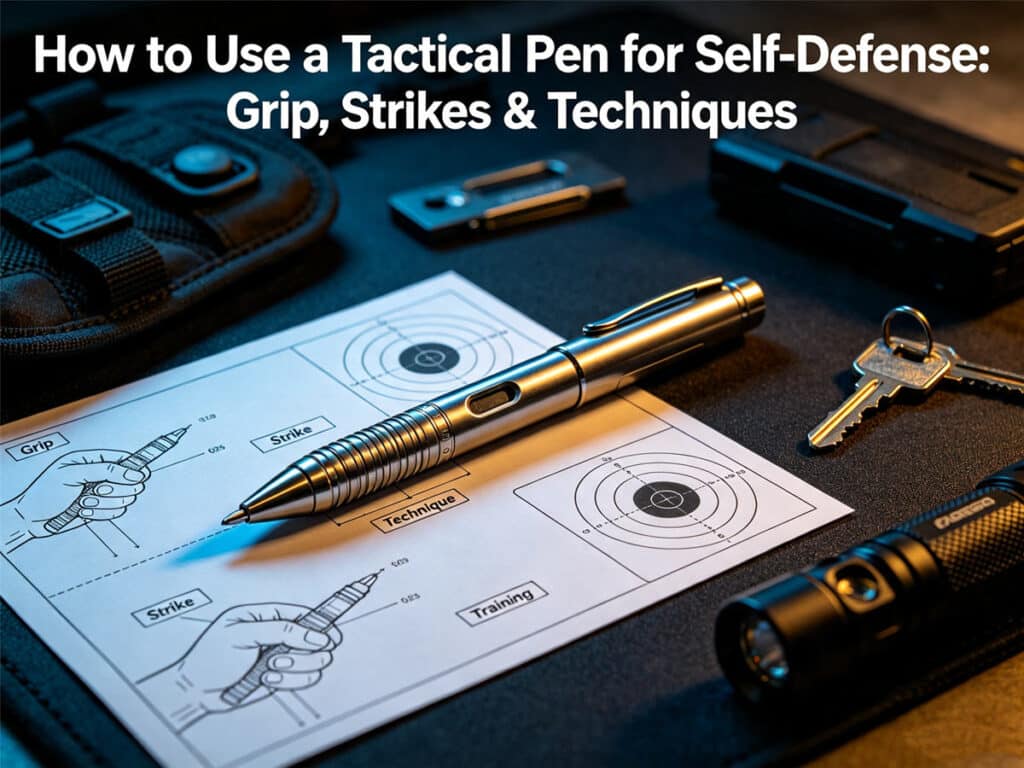
This is the most intuitive way to hold a tactical pen. Grip the pen like you’d grip a hammer, with the tip pointing downward past your pinky finger. Your thumb rests along the shaft for control, and your four fingers wrap tightly around the body. The hammer grip works well for downward strikes and overhead jabs. It feels natural even if you’ve never trained a day in your life—and that matters when adrenaline is pumping.
The Forward Grip (Ice Pick Style)
Some prefer to hold the pen with the tip pointing upward, like holding an ice pick. This grip puts the writing tip (or the hardened striking end) above your knuckles, ready for downward stabs. It’s particularly effective when you’re grabbed from behind and need to strike downward onto an attacker’s hands or forearms. Whichever grip you choose, the key is to hold the pen firmly enough that it won’t rotate in your hand on impact. That’s why knurled grips and textured bodies matter—our Titanium Bolt Action Tactical Pen features a precision-machined grip pattern that stays locked in your palm, even under stress.
3. Learn the Core Strike Techniques
The Straight Jab
Point the tip at the target and drive it forward in a short, explosive motion. Think of it as a punch, but with a hardened metal point leading the way. The straight jab is your bread-and-butter move—it’s fast, direct, and requires very little space to execute. Aim for soft tissue: the neck, face, or the webbing between an attacker’s thumb and index finger.
The Hammer Fist Strike
Using the hammer grip, bring the pen down onto the target in a short arc, like hammering a nail. This strike carries your body weight and works especially well when someone is on top of you or when you’re striking downward at a taller attacker’s collarbone or shoulder. The concentrated force at the pen’s tip makes it significantly more effective than a bare-handed hammer fist.
4. Know Where to Strike
Soft Tissue Target Zones
A tactical pen is a precision tool, not a blunt weapon. It works best against areas that don’t require massive force to cause pain and distraction:
- Neck and throat — a quick jab to the side of the neck interrupts an attacker’s focus instantly
- Face and temple — even a glancing hit to the cheekbone or temple creates enough pain to break their grip
- Inner forearms — strike the soft inner arm when someone grabs you; the pain is immediate and sharp
- Web of the hand — jab the pen into the fleshy gap between the attacker’s thumb and index finger to force a release
Pressure Points and Nerve Clusters
If you want to learn how to use a tactical pen at a deeper level, study basic pressure point anatomy. The nerve cluster behind the ear, the ulnar nerve along the outer forearm, and the radial nerve near the wrist are all vulnerable to the focused point of a tactical pen. You don’t need to be a martial artist—you just need to know where the pain receptors are densest.
5. Defensive Techniques Beyond Striking
Blocking and Redirecting
A tactical pen isn’t just offensive. You can use it to block incoming strikes by angling it across your forearm. If someone swings at you, catching their wrist or forearm against the pen shaft creates a painful counter-force that discourages follow-up attacks. The pen essentially acts as a rigid extension of your arm.
The Wrist Escape
If an attacker grabs your wrist, rotate your arm toward their thumb (the weakest point of any grip) while jabbing the pen into the back of their hand or the webbing between their fingers. This combination of rotation and targeted pressure usually breaks even the strongest hold. Practice this move slowly until it becomes muscle memory—you won’t have time to think through steps when it counts.
6. Practice, Carry, and Stay Prepared
Build Muscle Memory
Owning a tactical pen and knowing how to use one are two very different things. Spend ten minutes a week practicing your grip switches and strike motions against a pillow or heavy bag. The goal isn’t to become a fighter—it’s to make your reactions automatic so you can act decisively under pressure. As we always say at KW: the best self-defense tool is the one you’ve actually trained with.
Carry It Every Day and Know When to Use It
A tactical pen only works if it’s on you. Clip it to your front pocket, your jacket, or your bag’s pen loop. Make it part of your daily carry the same way you carry your phone and keys. Our tactical pen collection includes compact models like the Pioneer series—built for everyday pocket carry without bulk—so there’s no excuse to leave it at home. And remember: self-defense is about escape, not engagement. Use your tactical pen to create distance, cause enough pain to break free, and run. The pen buys you seconds—use those seconds to get to safety. If you’re ever involved in a real confrontation, document everything and report the incident to local authorities immediately.
Knowing how to use a tactical pen transforms a simple everyday carry item into a real layer of personal protection. It’s not about fighting—it’s about having options when you need them most. At Knuckles Warriors, we build tactical pens from titanium and tungsten steel because when your safety is on the line, your gear can’t be the weak link. Explore our full tactical pen lineup and find the one that fits your carry style—and your peace of mind.